





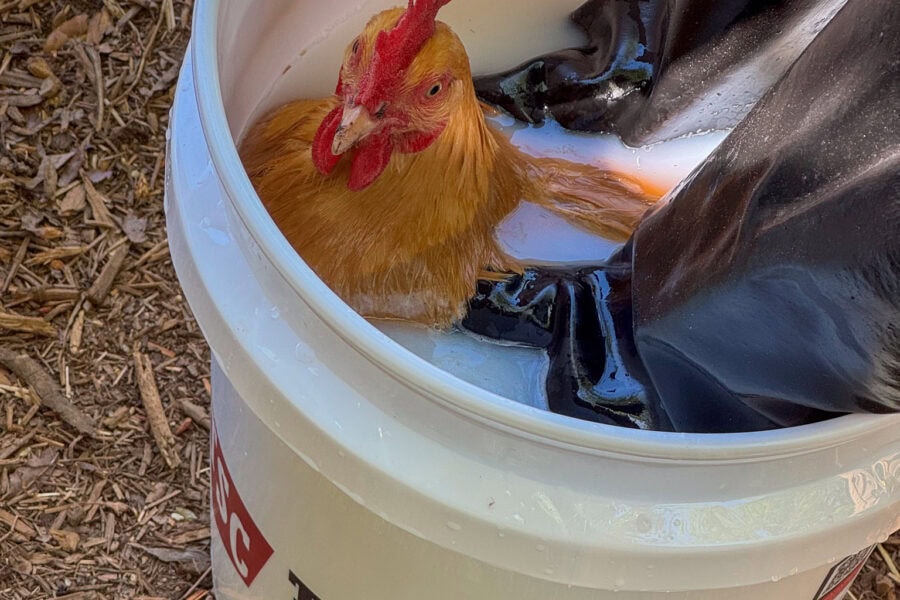
It started with a messy vent, or a dirty bottom in non-chicken speak. One of my Copper Marans had some excrement stuck to her super fluffy feathers surrounding her vent. The girls and I gave her a booty bath to clean her up, remember that?
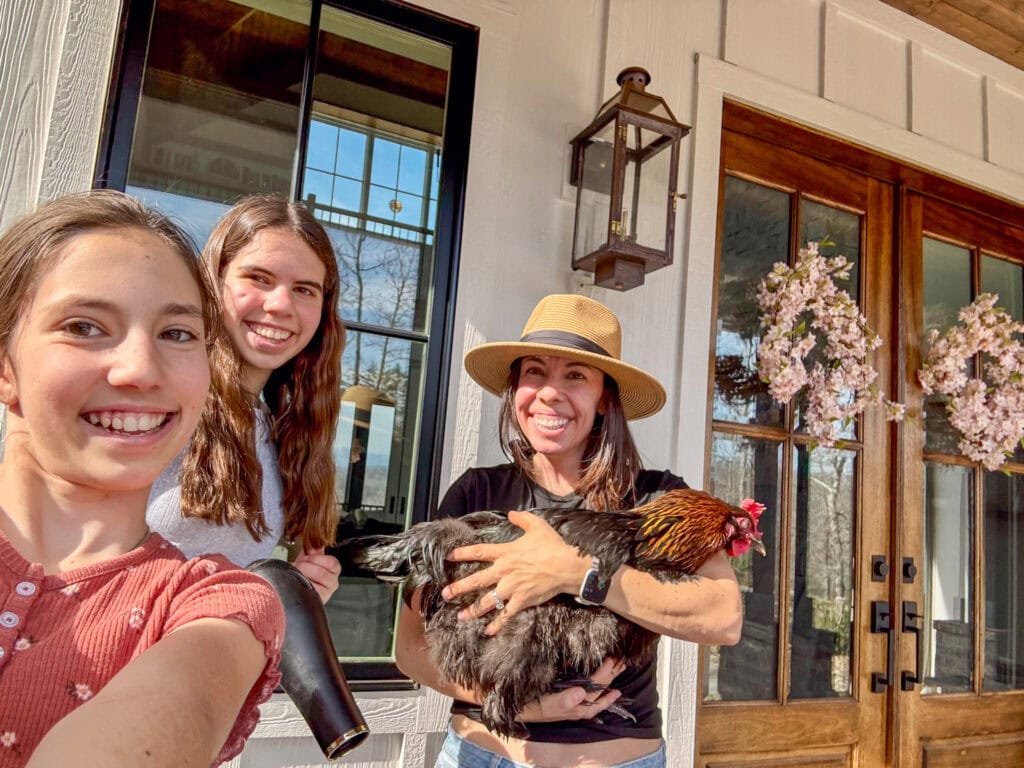
Ms. Wednesday did just fine with the experience and all seemed well. However, then she started getting bald patches on her chest and back. This very well could be from her being Earl’s “favorite” and over mating with her. I ordered a chicken saddle, a protective barrier she would wear to protect her skin and feathers from his sharp claws.
As I waited for the saddle to arrive I kept watching her and her poor little bald patches and the internet algorithm must have heard my thoughts (as it has a tendency to do) and the next thing you know I’m down deep in learning about mites on chickens.
Gross, right?
Here’s what I’ve learned though- mites are pretty common, especially if your chickens free range (check) in largely wooded areas (check). The first sign is usually a messy vent and if not treated the mites can cause feather loss. If one chicken has them, you can go ahead and assume they all do or will, so you should treat them all.
I’m not known for my cool-headedess when it comes to the wellbeing of my people and animals so I immediately decided we needed to do an entire coop clean out and treat all the chickens. I ordered the gold standard of treatment, Elector PSP, but when I saw that it wouldn’t arrive for two weeks, I decided to go the Permethrin route.
Elector PSP is expensive but a little goes a long way and it’s a one and done treatment because it kills mites and eggs. Permethrin works well, too but you have to repeat treatment after 7-10 days because it kills live mites but not eggs. I was just super eager to fix the issue and couldn’t wait for the Elector PSP, so we bought a bucket and got to it.
I was very grateful that David offered to help. Bless that man for being so supportive of my chicken dreams. The first step was to fully empty the coop and burn the bedding. I had been using hemp bedding because it’s supposed to be the best, and dust free. However, I discovered I’m more on team “clean the coop out more often” instead of deep litter, so I made the switch to pine shavings.
We burned the hemp and the nesting pads. I swept out every nook and cranny and then David went back in with the leaf blower for good measure. He diluted the permethrin and sprayed down the whole coop- nesting boxes, walls, roosting bars, everything.
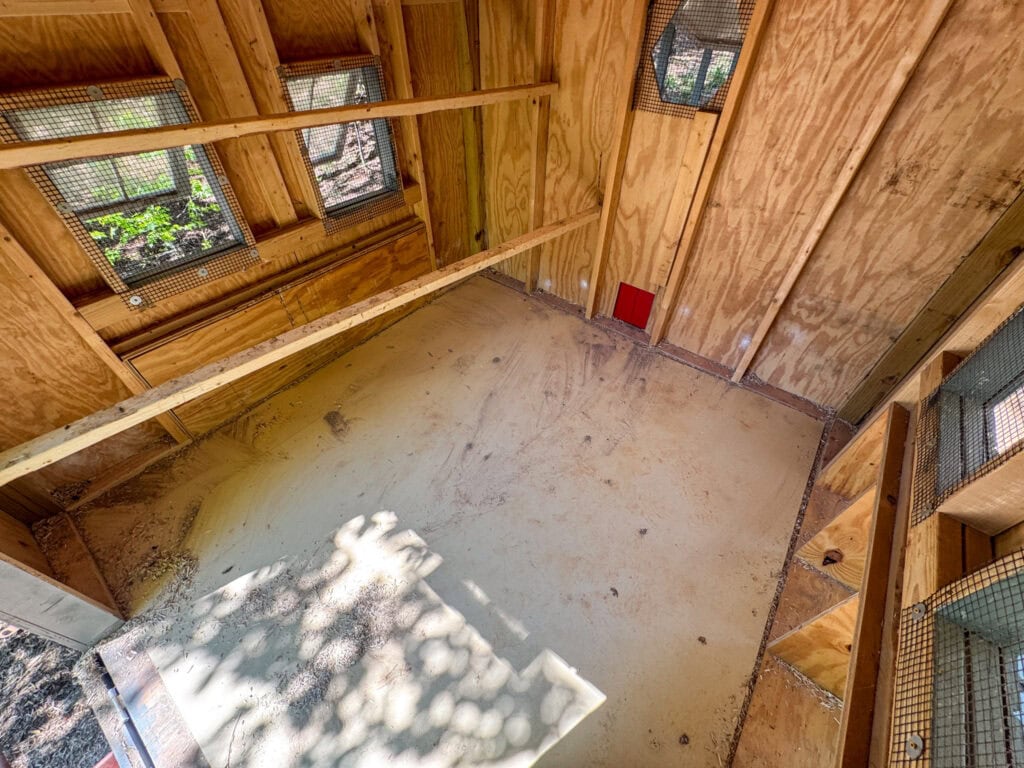

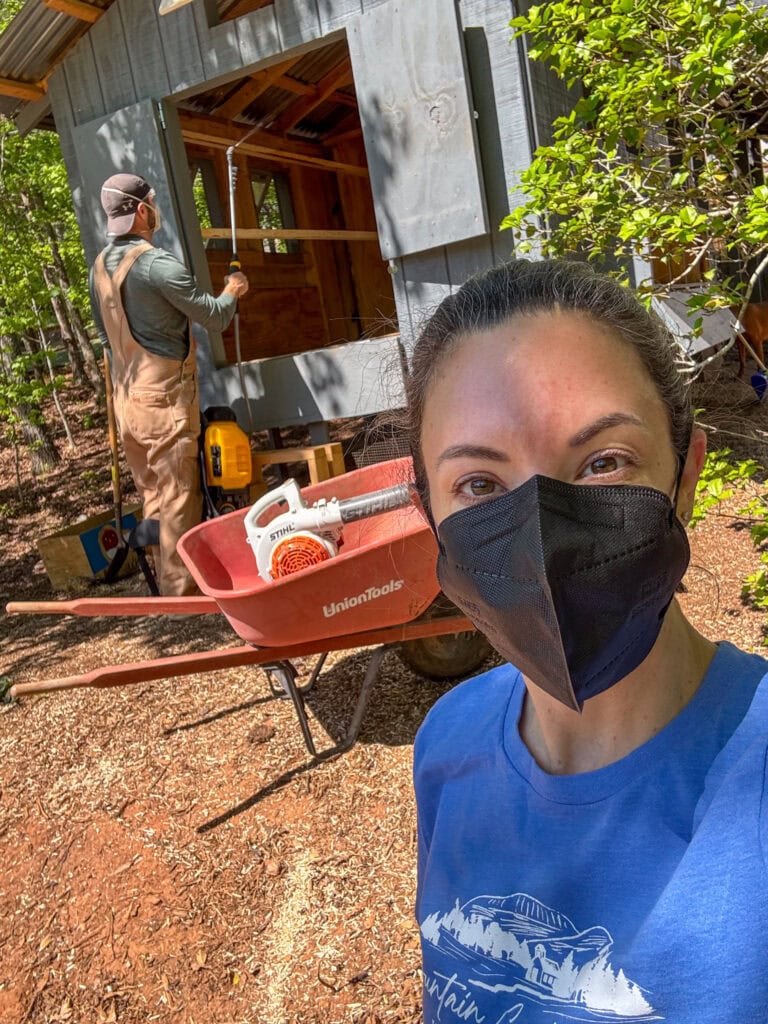
While the coop dried, it was time to focus on the chickens themselves. We were most nervous about Earl. Our resident rooster is honestly quite a jerk. I still don’t know what to do about him but for now he’s doing his thing and protecting the ladies, jumping at us often enough that we carry the Coop Scoop around with us to block his attempts.
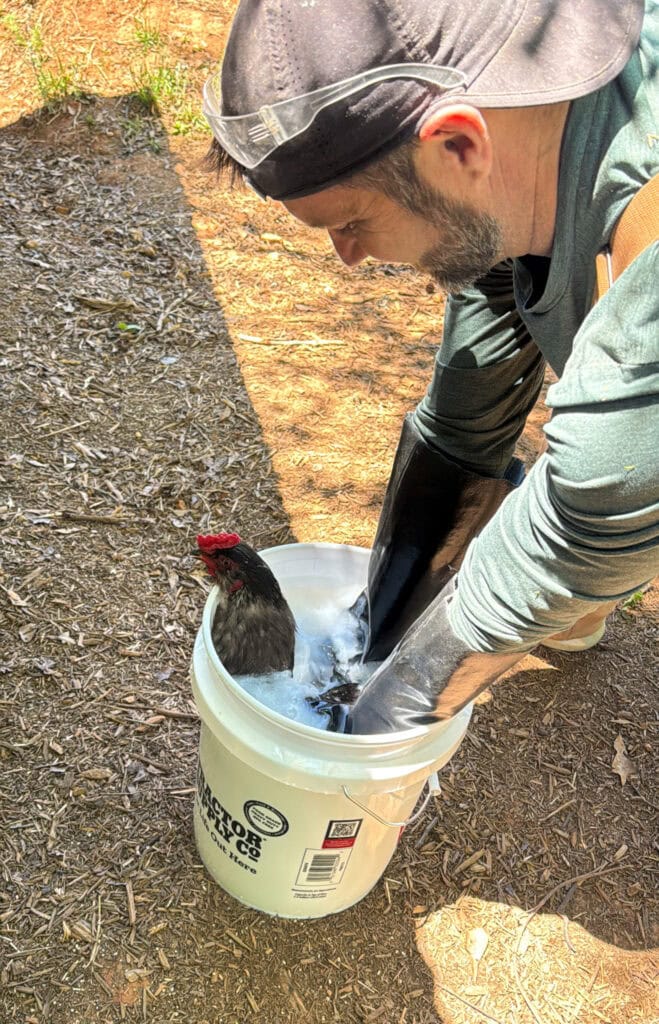
After much internet research, reading articles and watching videos from chicken experts, we decided on the dunking method. We mixed up 1 oz of Permethrin per gallon of water and decided to start with Earl.
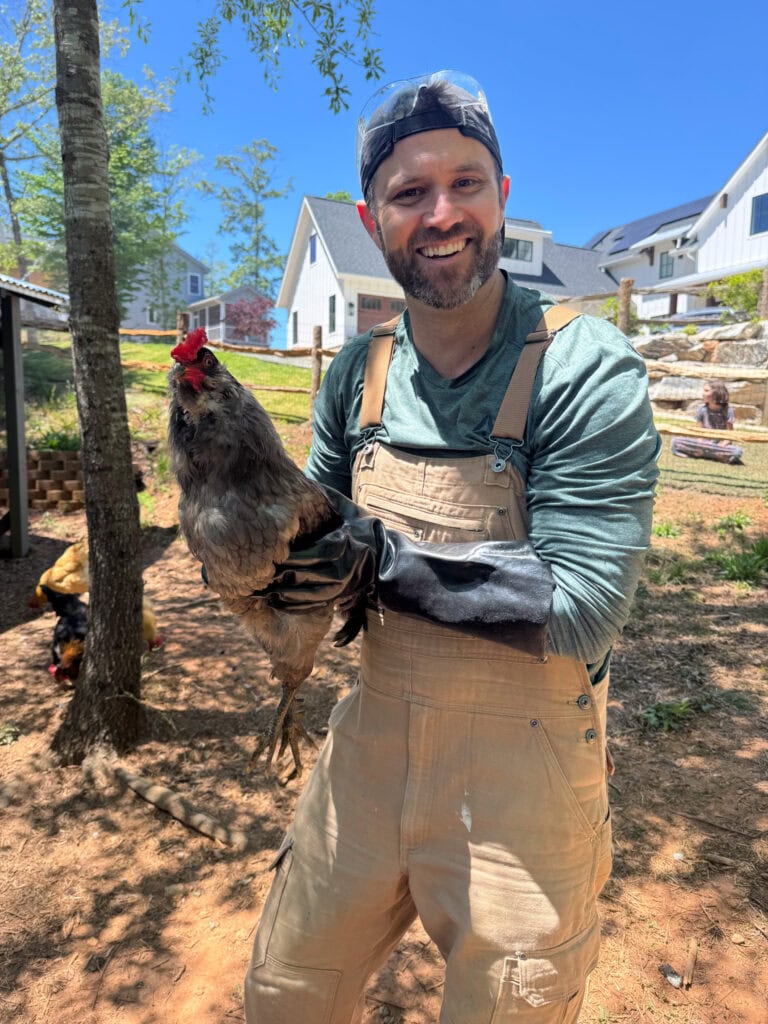
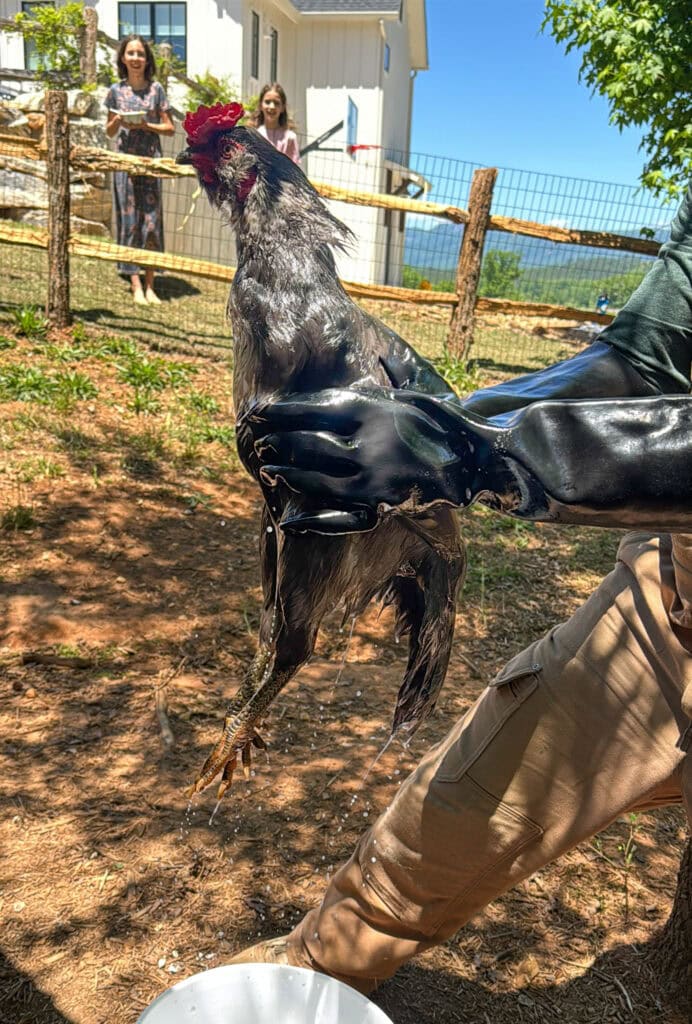
With gloves on David went for him and scooped him right up! Earl’s face was hilarious, looking confused and emasculated, but he did not struggle. David took him right to the bucket and dipped him in, holding him in the bath (not submerging his head) for 60 seconds to make sure it penetrated all the feathers.
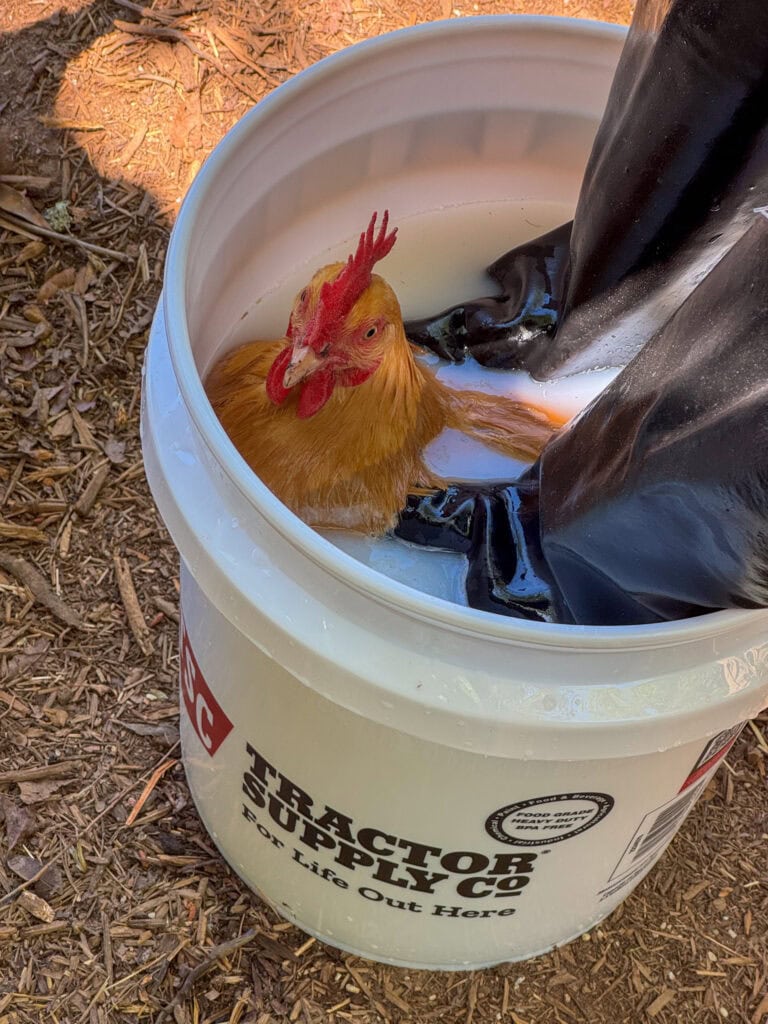
Once he was placed in the sun to dry, we started doing the same to all the hens. None of them minded the bath and actually settled quite comfortably into it for their minute soak.
However…
about halfway through the flock we noticed the dipped chickens looked… drunk?
They were having trouble walking, stumbling, falling over, or standing in a coop corner and not moving much.
I don’t want to say I panicked, but I certainly wasn’t far from it. I started googling furiously and was getting AI results talking about possible toxicity. WHAT?! I hadn’t heard a thing about this in any of my prior research and tears started rolling down my face =, convinced I had killed my chickens.
I decided we needed to rinse the ones doing rough and hope that would help.
David, the rock, stayed steady as he always does and together we rinsed Heyhey and BFG with warm water, then wrapped them in a towel and I sat snuggling my chickens in the sunshine hoping I hadn’t made a huge mistake.
Then slowly, as their feathers dried, they began to perk up. Slowly as first, but then their interest in Grubblies came back and before I knew it they were wandering around pecking the ground happily.
I’m still not sure what exactly happened, but Google tells me it most likely wasn’t toxicity but instead the shock of being dunked into a bucket of water and cooling off quickly. We had used warm water, but perhaps it still created a drop in temperature afterwards?
Whatever the reason, I was so happy to see them all recovering well and I got to work putting the coop back together now that all was dry. I added some coop conditioner, fresh shavings, and fresh nesting pads.
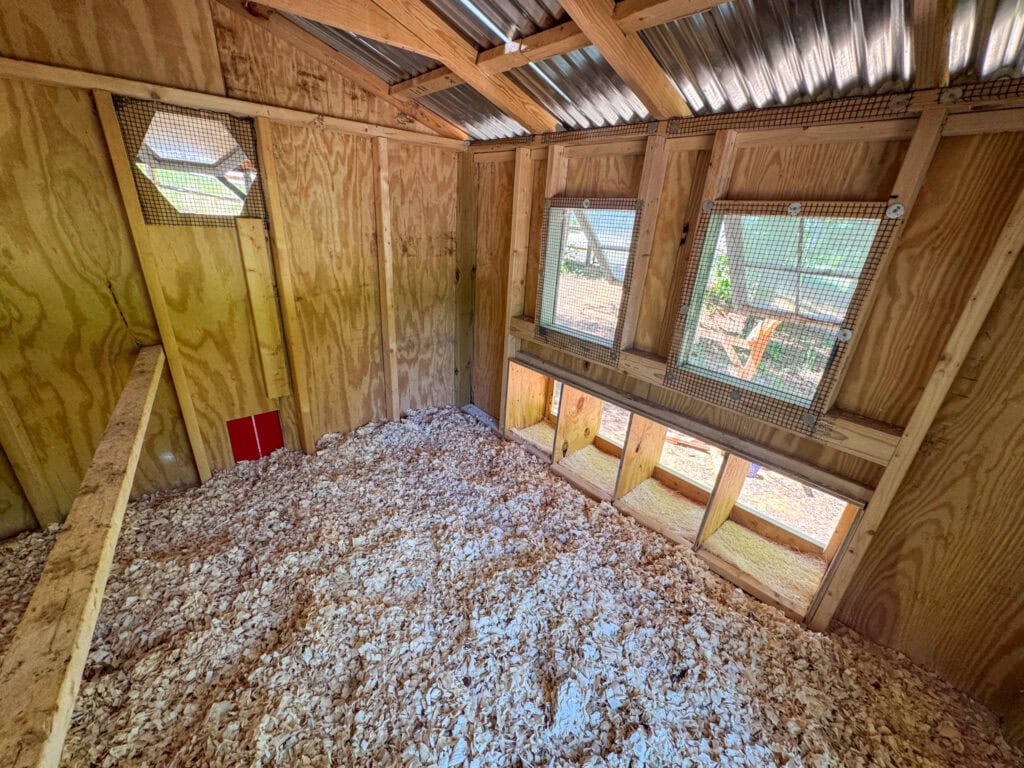
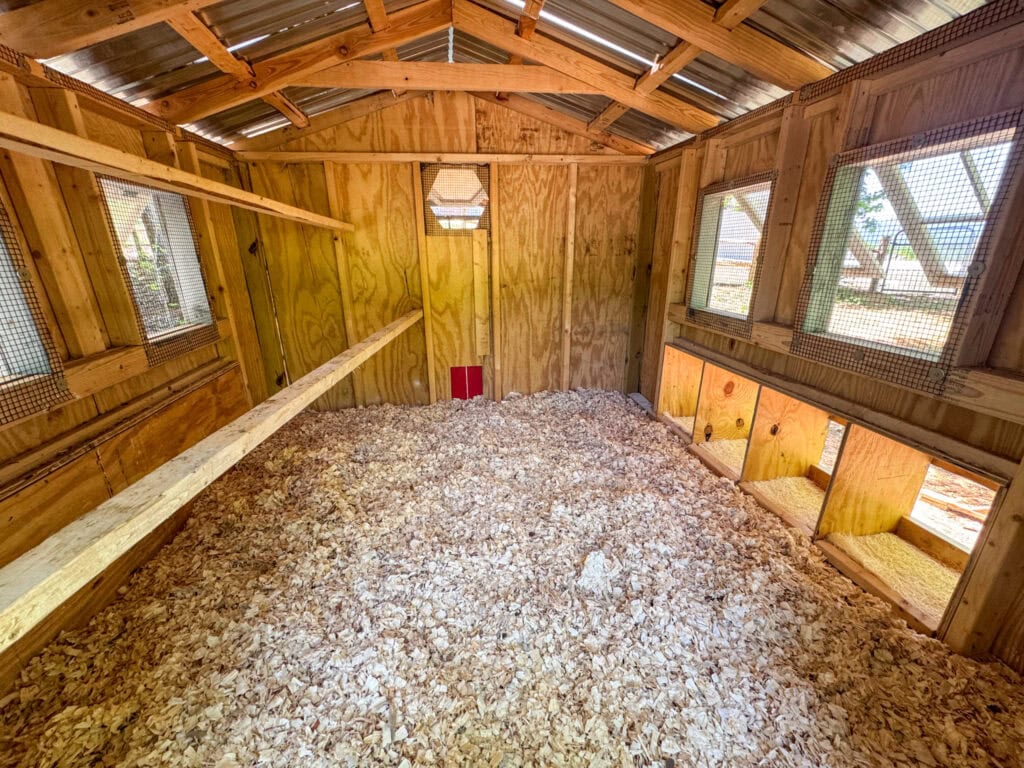
The real kicker?
Throughout this cleaning process I didn’t see any mites in the coop. I didn’t see any mites in the chicken feathers either. Maybe some debris that could be anything from dirt to dust to maybe mite eggs? But nothing crawling.
So I admitted to David after our 6 hour ordeal that I’m not quite sure there was any issue to begin with… but a fresh coop sure did feel good!
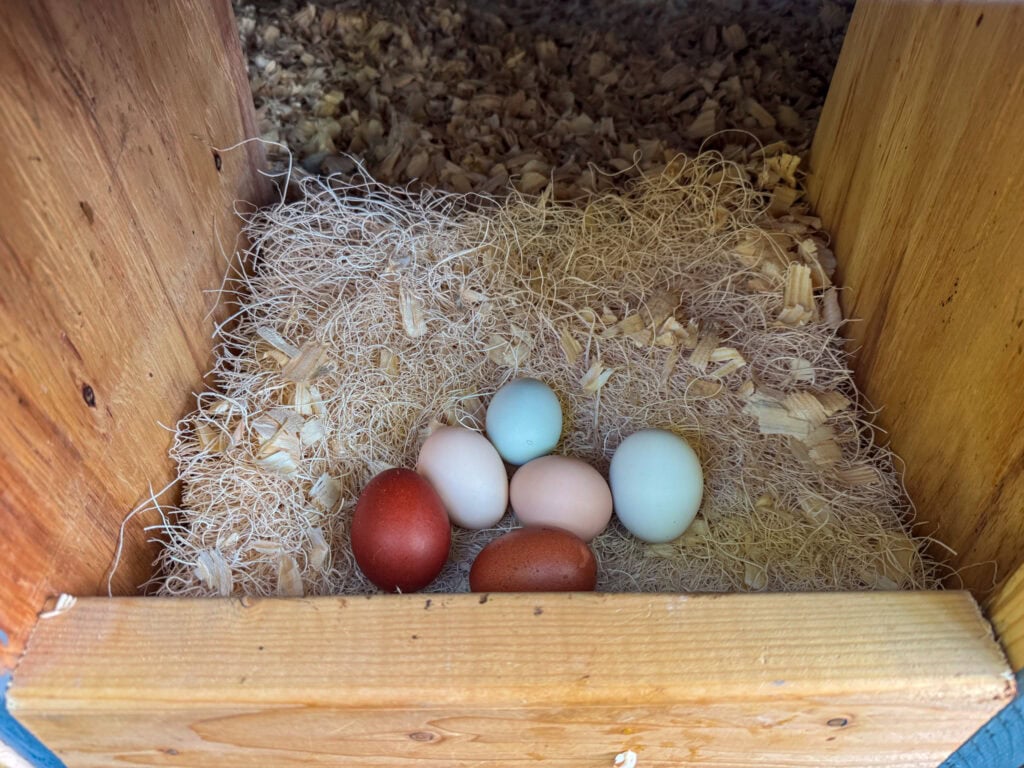
I think the girls agreed because the next day there were six bright and beautiful eggs (all in the same nesting box because it’s true… you can have as many nesting boxes as you want and somehow they’ll all prefer the same one.
And this concludes my chicken tale telling for the day, but I feel like it’s so easy to glamourize chicken ownership on the internet and I see why. I seriously love my chickens and could watch them run, explore, and peck the ground all day long. I cherish the eggs they give us. But it’s not all flowy dresses and baskets full of colorful eggs; sometimes it’s face masks, sprayers, and bucket dunks.


jess says
We have a similar issue with one of our chickens. She has had a dirty bottom from the beginning (she’s 2 years old) but last month or so she was losing feathers all along her chest and stomach, with bright angry red skin. She is only one out of the 3 we have with the problem. I’m interested to see if your mite treatment works for you, because we did not see any mites on her or in the coop, so I didn’t treat her. We thought maybe she was laying in poo in the night, based on the way the roosting bar was angled (poo collected in the corner which is the prime roosting spot), so we adjusted the bar to stop that. You may want to see if that’s an issue or if shes not using the bar at all, and laying in the coop shavings? I read somewhere that they do that sometimes, and you can peek in there at night to figure out. Hope it gets better, as I know how frustrating it is.
Brittany Dixon says
That’s a great tip; thank you! I will peek in the coop and see. And you don’t have a rooster? So overmating wouldn’t be the issue?
Kathy says
WOW! What a day you had!!!! Glad it all turned out well. And I am glad you posted about it because I agree, having chickens sounds like a walk in the park. I know nothing about having chickens but enjoy reading about yours. 🙂
Brittany Dixon says
Yes all the long sundresses and basket swinging images on IG certainly don’t show the coop cleanout and dunking details- ha! Happy to share all the joys and the less glamourous side, too 😉