





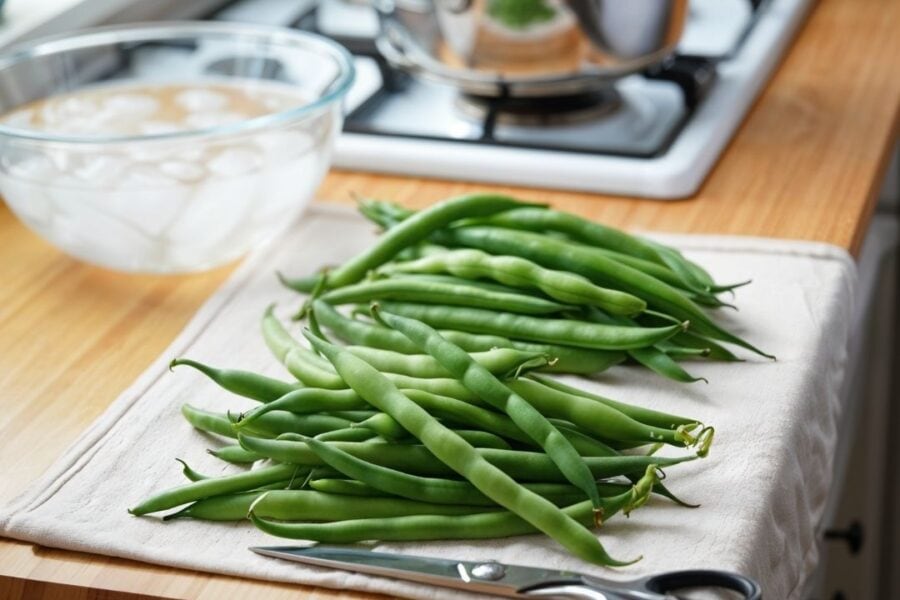
When I need a quick, reliable side dish for a family dinner, green beans are one of my go-tos. This is especially true when I make my easy green bean recipe! They’re simple, nutritious, and always a crowd-pleaser. The only downside? Fresh green beans aren’t available year-round.
You’ll usually find the best green beans from June through September, whether that’s at the grocery store, your local farmer’s market, or even your own backyard garden. This is when they’re at their freshest and most affordable. So when I end up with a big pile of beautiful green beans on my counter, the last thing I want to do is let them go to waste.
That’s where freezing comes in. I love freezing fresh green beans so I can enjoy them all year long without sacrificing flavor, color, or nutrients. And the best part is, it’s way easier than you might think.
I’m sharing my simple, step-by-step method for freezing green beans the right way. The process keeps them crisp, vibrant, and delicious, so they’re ready whenever you need a quick veggie side. Let’s get freezing!

How to Freeze Green Beans Without Losing Flavor or Texture
Fresh green beans don’t last very long. They usually stay good for about a week in the fridge or a couple of days at room temperature. And honestly, it feels like such a waste to toss those bright green beauties in the trash. That’s why I love practicing a little food preservation and freezing it for later.
And here’s the good news: freezing green beans doesn’t ruin them. When you do it right, their texture, color, and nutritional value stay intact. It’s one of the easiest ways to stretch your groceries, reduce food waste, and keep healthy ingredients on hand year-round.
That’s exactly why I’m dedicating this post to showing you how to freeze green beans. I’ll also walk you through why they’re so good for you and share my best tips for getting the tastiest green beans after freezing.
Are Frozen Green Beans Good for You?
Yes, frozen green beans are absolutely good for you. And in many cases, they’re just as nutritious as fresh ones (sometimes even more so!). When green beans are frozen properly, they keep most of their vitamins, minerals, and fiber thanks to a quick step called blanching. Don’t worry; I’ll walk you through exactly how to do that at home in a bit.
Here are a few of my favorite nutrients green beans bring to the table:
- Vitamins and Minerals: Frozen green beans hold onto key nutrients, including vitamin C, vitamin A, vitamin K, folate, and minerals such as potassium and magnesium.
- Fiber: Freezing doesn’t affect fiber at all. This means frozen green beans are still great for digestion and helping keep blood sugar balanced.
- Antioxidants: Those antioxidants responsible for green beans’ health benefits—and their bright green color—hold up beautifully in the freezer.
So, if you’re worried that freezing your green beans reduces their nutritional value, now you know! They’re nearly just as healthy as fresh ones, with the bonus of no looming expiration date.
Are Frozen Green Beans Better Than Canned?
Yes, frozen green beans are almost always a better choice than canned. They keep their texture, flavor, and nutrients so much better. Plus, they’re frozen quickly after harvesting without preservatives or extra ingredients, which is a big win in my book.
If you’ve ever opened a can of green beans, you know what I mean. They’re usually soft, kind of mushy, and dull in color. And if you flip over the nutrition label, you’ll find a lot of added sodium—which is totally unnecessary, in my opinion. That happens because canned green beans are cooked at a very high heat for a long time. This process causes them to lose key vitamins, like vitamin C and B.
Honestly, you’ll never find canned green beans in my pantry. I just can’t get past the floppy texture or all the added salt. My girls feel the same way. They want nothing to do with a limp green bean! That’s exactly why frozen green beans are our go-to veggie.
Bottom line: frozen green beans win when it comes to nutrition, flavor, and texture—no contest.
Can You Freeze Fresh Green Beans?
You can totally freeze green beans at home. But there’s a little more to it than tossing fresh beans into a freezer bag and calling it a day. If you want your green beans to keep that bright green color, crisp crunch, and all their nutrients, blanching beans before freezing is key. This step is non-negotiable and makes all the difference.
Below, I’m walking you through my simple method for freezing green beans the right way. It’s easy, budget-friendly, and such a smart move for both your health and your grocery bill.

How Do You Freeze Green Beans?
Step 1: Sort, Wash, and Trim
Start by spreading out all your green beans and giving them a quick once-over. You’re looking for bright-green beans that are both firm and smooth. If any are limp or spotty, either toss them or use them right away.
Once you’ve picked the good ones, rinse the beans under cool water in a colander. Pat dry, then trim off the stem ends and tails if you’d like. You can leave them whole or cut them into bite-sized pieces—whatever works best for how you plan to use them later.
Step 2: Blanch
Next, bring a large pot of water to a rolling boil. While the water heats up, fill a large bowl with cold water and plenty of ice. Trust me on this one: you’ll want your ice bath ready to go before the green beans hit the boiling water.
Once the water is boiling, carefully add the green beans. Blanch green beans for 2 minutes if they’re small or chopped, and 3 minutes if they’re whole and larger. Be sure not to overcook them—you’re just giving them a quick dip.
As soon as the timer goes off, use a strainer or slotted spoon to transfer the beans straight into the ice bath. This stops the cooking immediately and helps lock in that bright green color and nutrients. Let the beans sit in the ice bath for the same amount of time they were in the boiling water.
Step 3: Dry and Flash Freeze
Once the green beans are done chilling, drain them from the ice bath and pat them completely dry with a clean towel. You can also use a salad spinner if you have one—it works great here. The key is removing as much moisture as possible to prevent ice crystals and freezer burn later on.
Next, spread the green beans out in a single layer on a baking sheet. Pop the tray into the freezer and let them flash freeze for 1-2 hours. This extra step is so worth it. It keeps the beans from freezing together into one big green bean block! Plus, it makes them especially easy to grab by the handful later.
Step 4: Pack and Seal
Once the green beans are firmly frozen, transfer them to a freezer-safe bag or container. I like to portion them into “dinner-size” amounts. This lets me grab exactly what I need without thawing the whole batch. Flat freezer bags are my favorite because they stack neatly and save so much precious freezer space.
Don’t forget to label each bag with the date! While frozen green beans don’t technically go bad, you’ll get the best flavor and texture if you use them within 8-12 months.

How to Prepare Green Beans for Freezing
Choose your green beans carefully.
If you’re taking the time to freeze green beans, you want to make sure you’re starting with the good stuff. Spend a few minutes sorting through your beans and choosing the best ones for freezing. Look for beans that are firm, crisp, and bright green—those will freeze beautifully.
If any beans feel limp, look spotty, or have dark marks, set them aside. Those are better used right away or tossed. Starting with fresh, high-quality beans makes all the difference when you pull them out of the freezer later.
Trim and cut the green beans.
Taking a few extra minutes to trim those tough, woody ends off your green beans before freezing is so worth it. It makes cooking later a breeze—and saves you from biting into a hard, chewy piece at dinnertime (no thank you).
If you choose to cut your green beans into smaller pieces, that helps them blanch and freeze more evenly, too. The result? Better texture, more even cooking, and green beans that taste just as good when you pull them out of the freezer months later.
Frequently Asked Questions About Freezing Green Beans
Can you freeze cooked green beans?
Yes, you can freeze cooked green beans! Just know that they’ll be a fit softer once thawed. For the best texture, slightly undercook them before freezing so they don’t turn mushy later.
How long to blanch green beans for freezing?
Blanch green beans for 2-3 minutes, depending on their size. As soon as the timer goes off, transfer them straight into an ice bath to stop the cooking.
Can you freeze green beans without blanching?
You can, but I don’t recommend it. Skipping blanching often leads to dull color, off flavors, and a softer texture over time. Blanching really makes a huge difference.
Can you freeze canned green beans?
Technically, yes, but it’s not ideal. Canned green beans are already very soft, so freezing and thawing them usually makes them even mushier.
How to freeze fresh garden green beans?
Start by washing and trimming them. Blanch for 2-3 minutes, cool them in an ice bath, dry them well, then freeze in airtight containers or freezer bags.
How long can you freeze green beans?
For the best flavor and texture, use frozen green beans within 8-12 months. They’re still safe to eat beyond that, but quality may start to decline.
Can you freeze green beans before canning?
Yes, you can freeze them first if needed. But for the best texture and quality, it’s always a good idea to can green beans while they’re fresh.
Freezing your fresh green beans is a healthy and delicious way to prevent food waste and lower your grocery bill.
When it comes to food preservation, I’m all in on getting the most out of our groceries. (Even better when it’s something we’ve grown ourselves!) One of my favorite ways to do that is by freezing fresh fruits and veggies, especially green beans.
Any time I spot fresh produce on sale or bring home a big haul from the farmer’s market, I prep what I can and tuck it into the freezer. That way, nothing goes to waste, and I always have healthy ingredients ready to go. It’s such a simple habit, but it makes a big difference.
So next time you see beautiful, bright green beans at the market, grab a bunch and freeze them for later. You’ll be so glad you did!
And if you’re ready to freeze even more fresh ingredients, be sure to check out my posts “How to Freeze Fresh Blueberries” and “How to Freeze Cauliflower Rice” next.

Leave a Comment