





We’ve got a pretty big job as parents, don’t we? And I’m not just talking about the feeding, dressing, and keeping-everyone-alive part (although that alone can feel like a full-time role). I’m talking about helping our kids build character—one life skill at a time.
One of the most important skills we can nurture in young children? Curiosity.
Curiosity plays such a powerful role in childhood development. It helps kids learn, build confidence, solve problems, and develop a genuine love of learning. And while some children seem naturally curious from the start, others need a little more encouragement—and that’s completely okay.
When kids feel safe and supported, curiosity tends to follow. They begin asking questions, exploring new ideas, and wondering why things work the way they do. Those moments of wondering are where so much growth happens.
The good news? Curiosity is something we can gently encourage every day. It doesn’t require special activities or elaborate plans. In fact, some of the best opportunities happen in ordinary moments—during playtime, conversations, or even while running errands.
In this post, I’m sharing a few simple and practical ways to encourage curiosity in kids. Nothing complicated—just small, intentional shifts you can easily weave into your daily routine to help spark your child’s natural sense of wonder.

How to Encourage Curiosity in Kids Using Everyday Moments
Little kids are surrounded by people who shape the way they see the world. Naturally, this also includes how curious they feel about it. Whether you’re a parent, teacher, or caregiver, you play a big role in developing curiosity.
In this blog post, I’ll chat about why encouraging curiosity is such a big deal. Afterwards, I’ll explore how you can encourage it in meaningful, long-lasting ways. These are real-life tips we can use to help kids grow into thoughtful, inquisitive, and confident little humans.
What Is Curiosity for Kids?
Curiosity is that little spark that makes you wonder, “Why does this happen?” or “What’s inside?” or “What if I try it this way instead?”
For kids, it shows up in the most beautiful ways. It could be when they ask a million questions or mix colors just to see what happens. Or, it may show up when they crouch down to get a closer look at a bug on the sidewalk. Essentially, curiosity is how they explore, learn, and stretch their imaginations.
It’s what drives kids to try new things, experiment, and make sense of the world around them. And as they do, they’re building confidence, creativity, and problem-solving skills without even realizing it.
Why Is Curiosity Important for Kids?
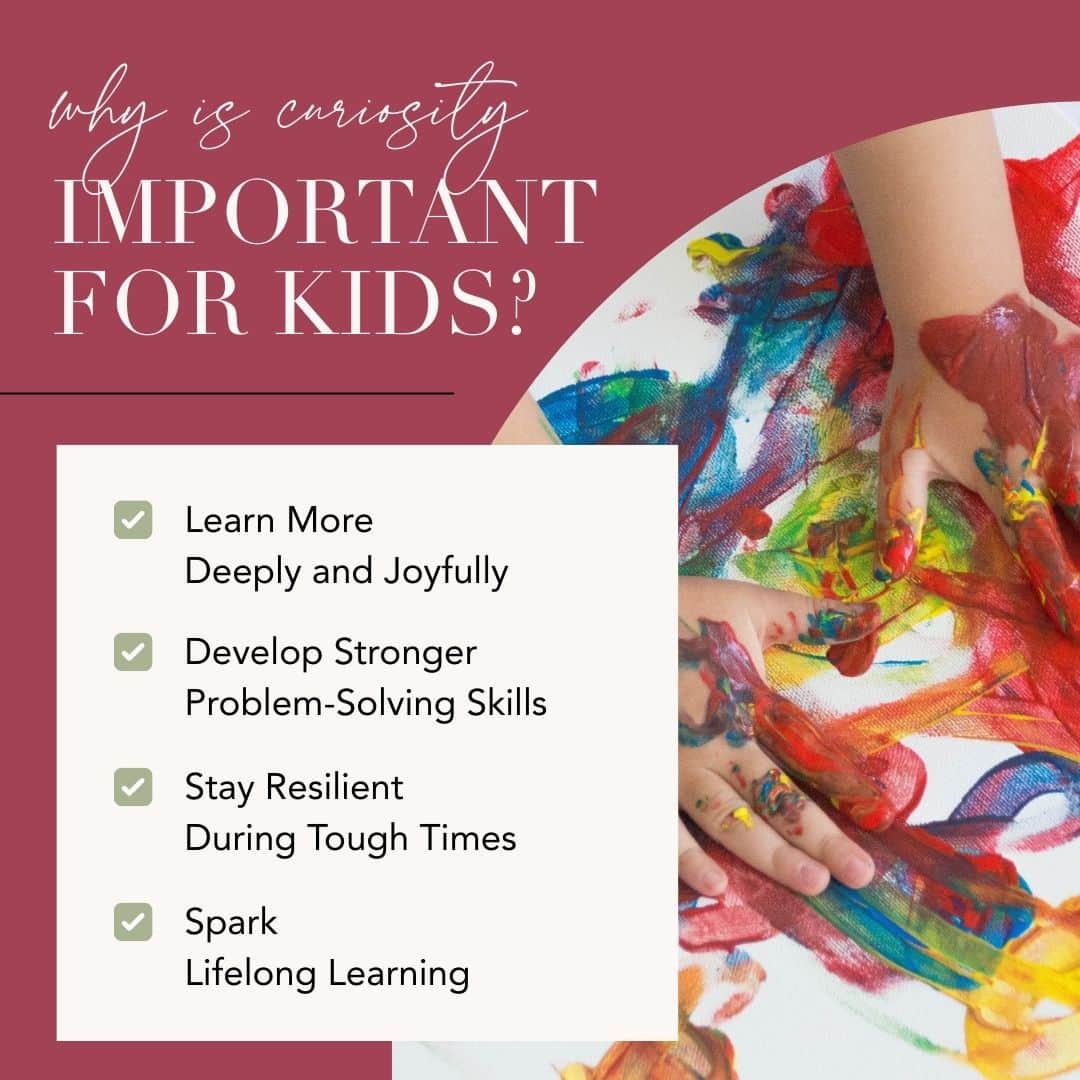
Learn More Deeply and Joyfully
Curiosity turns learning into something kids want to do, not something they have to do. It’s the difference between reading a book just because it’s assigned and diving into one because they’re dying to learn more.
When curiosity leads the way, kids don’t just memorize facts. They look for answers, ask more questions, and connect with what they’re learning. And here’s the cool part: studies show that curious children actually tend to do better in school, especially in math and reading.
So not only does curiosity make learning more exciting, but it can also help them thrive in the classroom!
Develop Stronger Problem-Solving Skills
Problem-solving is one of those life skills we all want our kids to have. It helps them think for themselves, stay calm when things don’t go as planned, and find solutions rather than giving up. And believe it or not, one of the best ways to help them build those skills is to help foster curiosity.
When kids start asking “why” and “how,” they’re already stepping into problem-solving mode. From there, that curiosity leads them to explore, test ideas, and try new ways to make things work. They’ll try different approaches, experiment with solutions, and understand more about how the world works—one puzzle at a time.
Stay Resilient During Tough Times
Curious kids tend to be more resilient when things get tough. They’re more willing to stick with a challenge, even when they hit setbacks along the way. Instead of viewing a problem as a step backward, they start to see it as a chance to learn something new. This is where all those problem-solving skills really come to life.
The truth is, life gets hard sometimes. Teaching our kids how to keep going, stay flexible, and bounce back is one of the best gifts we can give. And, fortunately, encouraging curiosity is such a simple place to start. It helps them approach challenges with a sense of possibility rather than frustration.
Spark Lifelong Learning
Encouraging curiosity in kids doesn’t just make learning more fun right now—it can spark a lifelong love of learning. You know that old saying about learning something new every day? Curiosity is what makes that possible.
When you nurture that sense of wonder, you’re helping your child build habits that stick with them for life. They’ll grow up asking questions, hunting down answers, and staying open to new ideas. That mindset doesn’t just help them power through tricky challenges. It also helps them discover hobbies, passions, and little pockets of joy as they grow.
How to Develop Curiosity in Kids
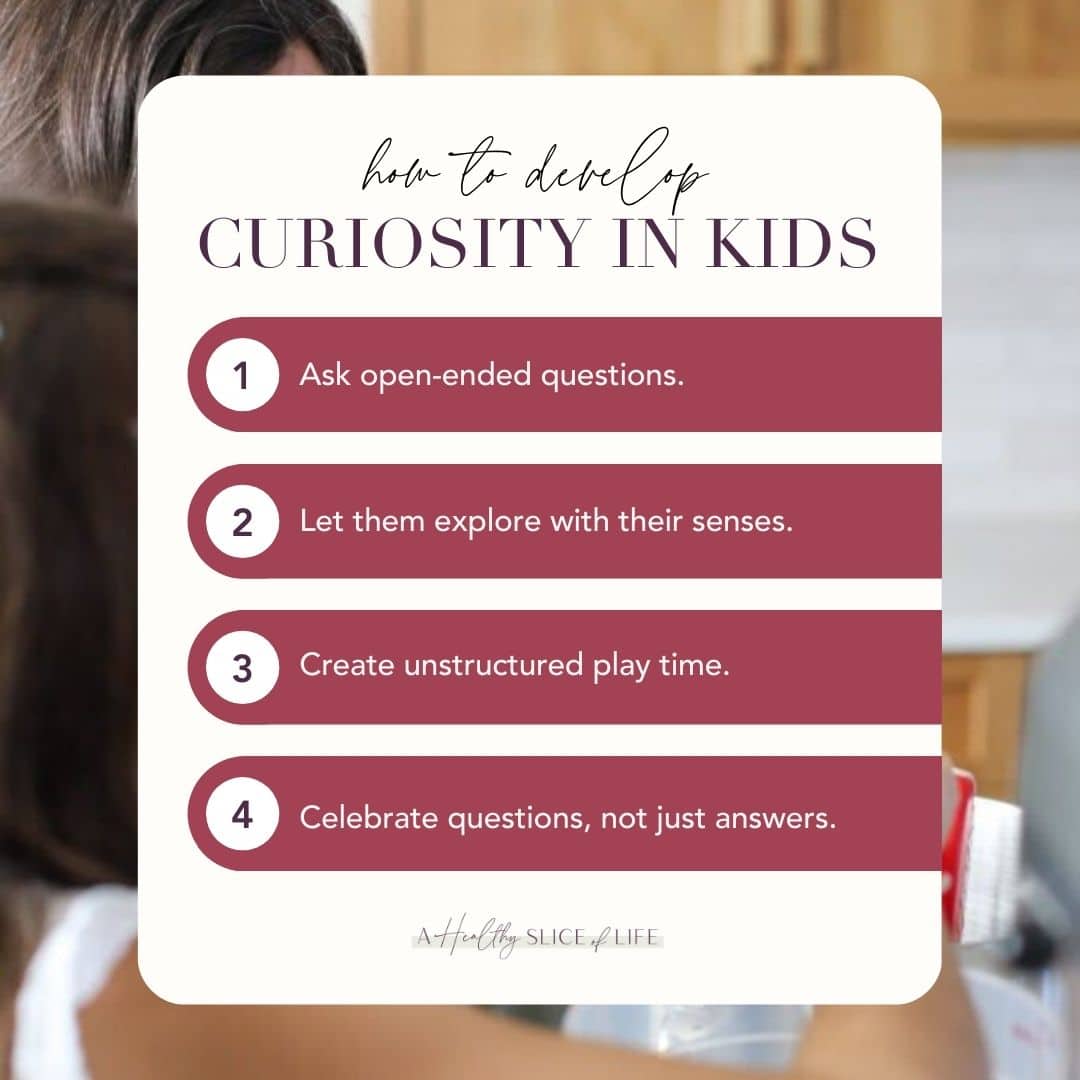
Ask open-ended questions.
When you’re chatting with your kids, try sprinkling in a few open-ended questions. These are the kinds that can’t be answered with just a “yes” or “no.” So instead of asking, “Did you have a good day at school?” try something like, “What was the most interesting part of your day?”
Open-ended questions give your child a chance to really think and reflect—especially because there’s no right or wrong answer. They just get to explore their own thoughts and share what’s on their mind. And the best part? You get a little peek into how they’re processing their day, what excites them, or even what might be weighing them down.
It’s a simple switch, but one that opens the door to deeper, more meaningful conversations.
Let them explore with their senses.
One of the easiest (and most fun!) ways to spark curiosity in little ones is through their senses. Sensory play gives kids the chance to explore the world around them hands-on. And this is often when the best questions start bubbling up.
Here are a few simple, everyday ways to encourage sensory discovery:
- Touch: Head outside for a Nature Touch Walk. Have your kids collect things that feel different—think rough bark, soft moss, smooth stones, or crunchy leaves. Ask them to describe each one with their own words.
- Smell: Whip up some scented playdough using a few drops of essential oils like lavender, lemon, or peppermint. As they squish and roll, let them guess the scents.
- Sight: Play a quick Color Hunt around the house or yard. Pick a color and see how many things they can find that match. It’s simple, but it gets them looking closely at their environment.
- Sound: Fill small jars with rice, coins, dried beans—anything that rattles. Let your kids shake each one and compare the sounds. For extra fun, have them close their eyes and guess what’s inside.
- Taste: Try a fruit tasting challenge. Offer a few different fruits and have your child describe what each tastes like. It’s a fun way to build vocabulary and curiosity.
These kinds of activities don’t require fancy supplies or hours of prep. Just a few minutes of play that help your child connect with the world around them in the most curious, creative way possible.
Create unstructured play time.
I love a good board game night as much as anyone, but when it comes to sparking curiosity in kids? It’s the unstructured, open-ended play that really lights up their imagination.
Set out a few toys without instructions—think wooden blocks, LEGOs, art supplies—and just let them go. No rules. No plan. Just space to explore and figure things out on their own. It’s amazing to watch what their little minds come up with when they’re left to entertain themselves. When my girls were little we had a permanent craft table set up in the dining room and I would switch out available materials each day. They’d love to see what the new items were and I loved watching their imagination light up with the possibilities of use for these new items.
And don’t forget about the magic of outdoor play. Remember when we were kids and told to “just be home by dinner”? No schedule or planned games. Just hours to wander, dig in the dirt, climb trees, and chase bugs. That kind of play—with no real objective—can be one of the best ways to encourage curiosity.
So the next time you’re tempted to fill every minute with an activity or lesson, try stepping back instead. Give them space to explore. Their curiosity will do the rest.
Get some more ideas in my blog post, “Self-Directed Activities for Spirited Four-Year-Olds.”
Celebrate questions, not just answers.
We’ve all been there—your kid asks “Why?” for what feels like the hundredth time before breakfast. It can be so tempting to say, “Because I said so!” and move on. Admission: I’ve totally done this. But here’s the thing: all those “whys” are little windows into your child’s curiosity. And that’s something worth celebrating.
Next time they launch into a question spiral, take a deep breath and try to answer as best you can. If you don’t know the answer? That’s okay too! You can say something like, “Hmm, that’s a really good question. I love how curious you are!” Even a response like that encourages their desire to learn.
The quickest way to dim that spark is to shut their questions down with a “stop asking” or “it doesn’t matter.” But when you praise the question, even if you don’t have the answer, you’re teaching them that it’s good to wonder. You’re showing them their questions matter.
And honestly? That’s one of the greatest gifts we can give our kids—a safe space to ask, wonder, and grow.
Spark your child’s curiosity from an early age and be amazed at the person they become.
Teaching curiosity early on is truly one of the best things we can do for our kids. It builds confidence, creativity, and all those life skills they’ll lean on as they grow. I know parenting isn’t always a walk in the park, but encouraging curiosity? It’s one of those must-haves in the toolbox while we raise these little humans.
If you’re into practical parenting tips, healthy meals, homeschooling ideas, or just everyday family life, I’d love for you to join my newsletter. And don’t forget to come hang out with me over on Instagram.
Loved this post? You might also enjoy:


Leave a Comment