





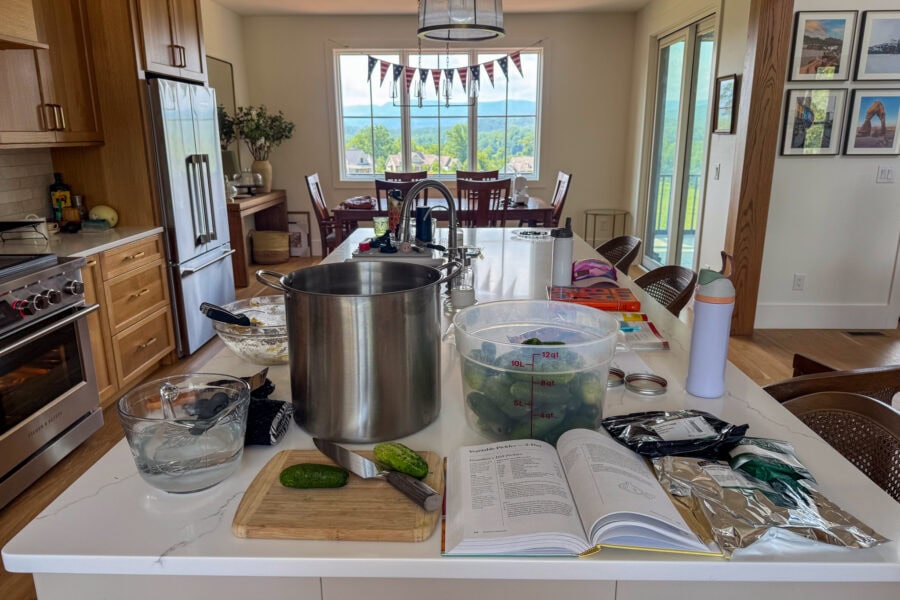
I declared this the summer of pickles.
I wanted to learn as much as I could, which apparently meant planting multiple kinds of cucumbers, making batch after batch of pickles, and conducting more crispness experiments than any normal person probably should.
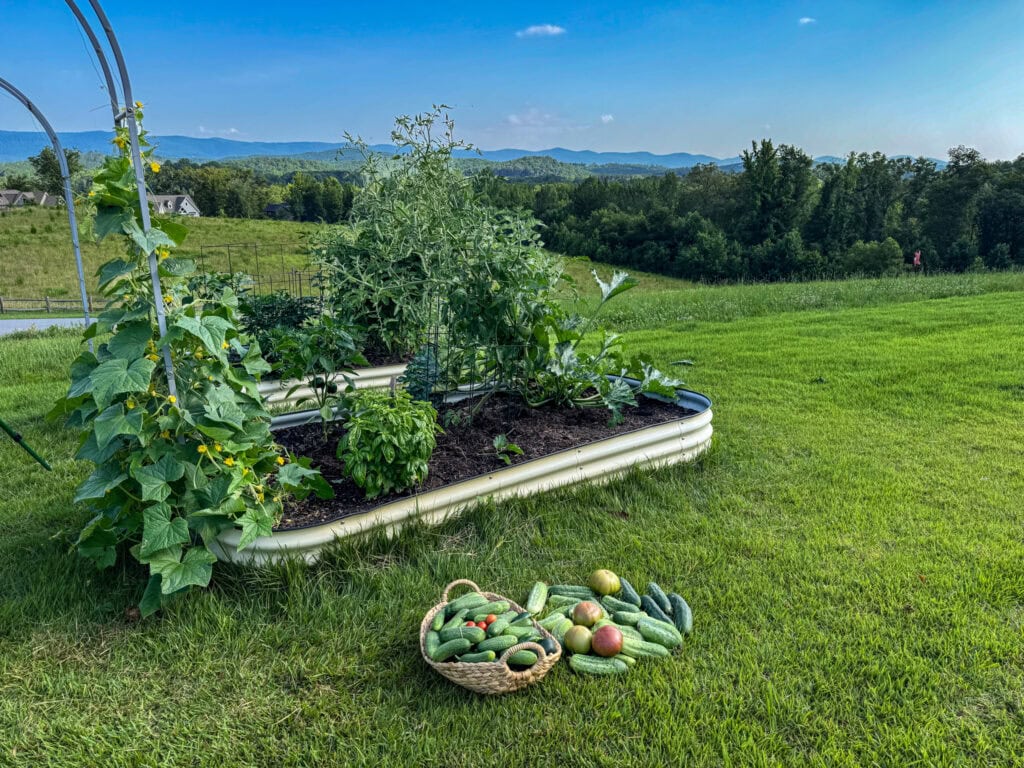
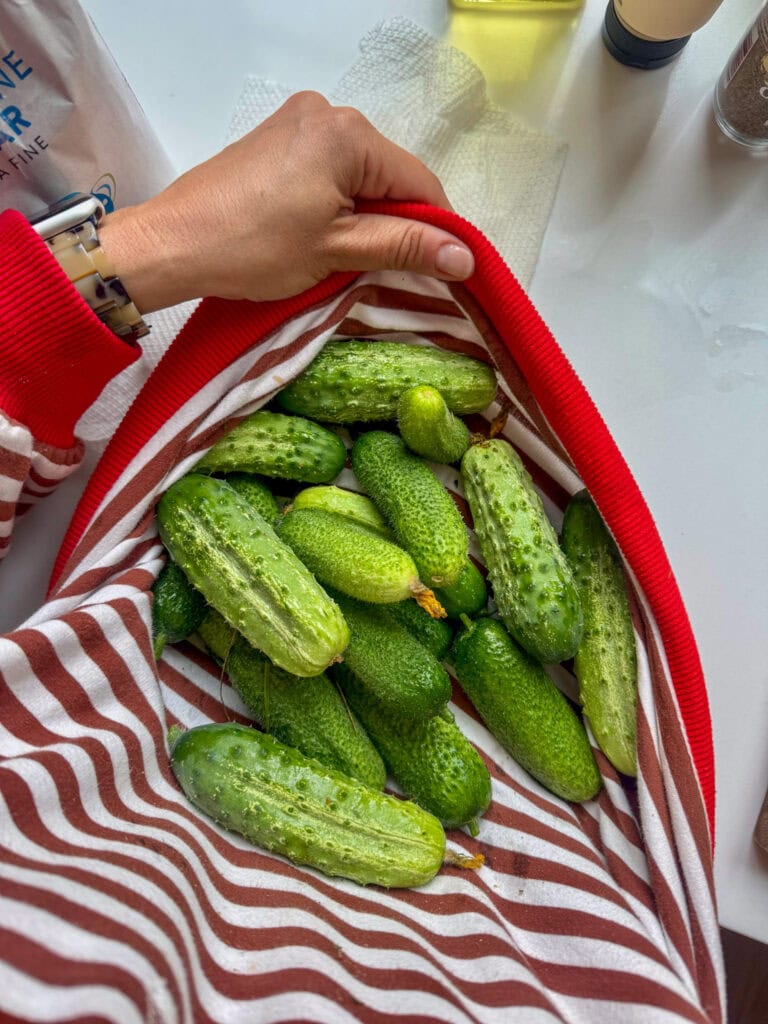
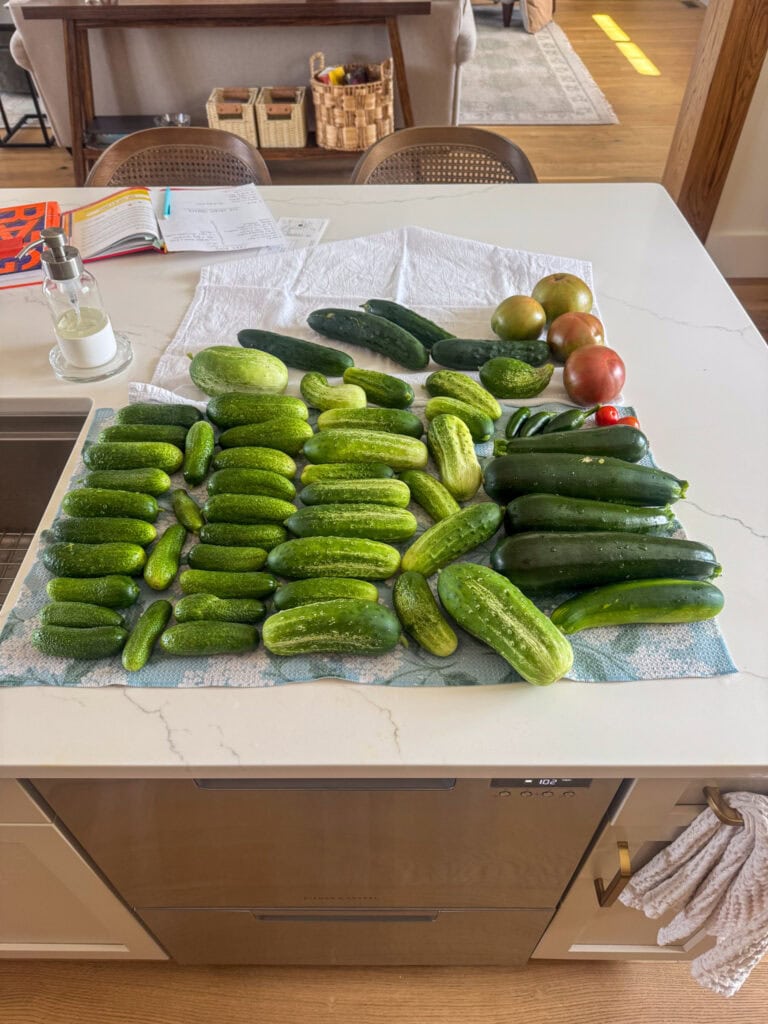
I planted pickling cucumbers, slicing cucumbers, and gherkins. The gherkins have been incredibly prolific, and I really liked the idea of pickling them whole like little baby dills.
However, I don’t think I’ll plant them again next year. They are super fuzzy and spiky on the outside, and after all my experimenting, I realized we simply prefer pickle spears and chips over whole baby dills. The regular pickling cucumbers have been the clear winner for us.
Still, that was the point of this summer: try it all and see what we actually like.
What I Learned About Growing Cucumbers
First of all, trellising is a must.
I used my arch trellises this year, and they worked well enough, but next year I’m giving those to the green beans and using cattle panels for the cucumbers instead.
Cucumbers need plenty of room to spread, but they don’t really need all that height. I think a wider setup will make more sense and make the cucumbers easier to spot, too, because they are oddly good at hiding. You’ll look at a vine and see absolutely nothing, then move one leaf and discover a cucumber the size of your forearm.
I also learned to check the plants every day once they really started producing. Cucumbers go from tiny to enormous at an alarming rate, and the smaller pickling cucumbers were definitely the best for texture.
For pickling, I tried to pick them before they grew much longer than about four inches. Letting them get too big usually meant more seeds, a softer center, and a less ideal pickle.
Pruning was also helpful, and this year I got ruthless with pruning my entire garden and I think it really paid off. It’s true that at first I kept thinking, but what if I’m cutting off a future cucumber?
However, once the plants really got going, pruning helped direct the growth and kept everything from completely taking over. I didn’t do anything fancy. I just removed damaged leaves, crowded growth, and vines heading off in directions I did not approve of.
Something was eating a few of the leaves, but never enough to cause a real problem. I checked the plants most days and hand removed any bugs I saw.
I fertilized about every four to five weeks because I heard cucumbers are heavy feeders, and that seemed to work well. Pollination was no issue at all because we have a ton of bees. Once the plants started flowering, the bees were all over them and the cucumbers followed.
As for how many cucumber plants we actually need, the answer is fewer than I planted this year. Next year, I plan to grow 2-3 pickling cucumber plants and 1 (possibly 2) slicing cucumber plants. That should be plenty for fresh eating, pickling, and keeping me sufficiently busy without completely burying me in cucumbers.
My Quest for a Crisp Pickle
A lot of my experimenting centered around one very important pickle quality: crispiness. Nobody wants a floppy pickle.
I started out processing my jars for 20 minutes, like my Nannie’s recipe recommended. Then I tried 15 minutes. Eventually, I found a recipe that said I could do it for just 10 minutes and that seems to work well. That shorter processing time made a noticeable difference in the texture.
I don’t know how this holds up “officially” with something like the USDA so do your own checking to find a processing time you feel most comfortable with, but since botulism can’t grow in acidic environment (pH above 4.6), I feel good about it. If you want to test to feel better about it, give these a try.
But beyond processing time, I found a few other things that really helped.
First, pickle the cucumbers as close to when you pick them as possible. Freshness makes a big difference.
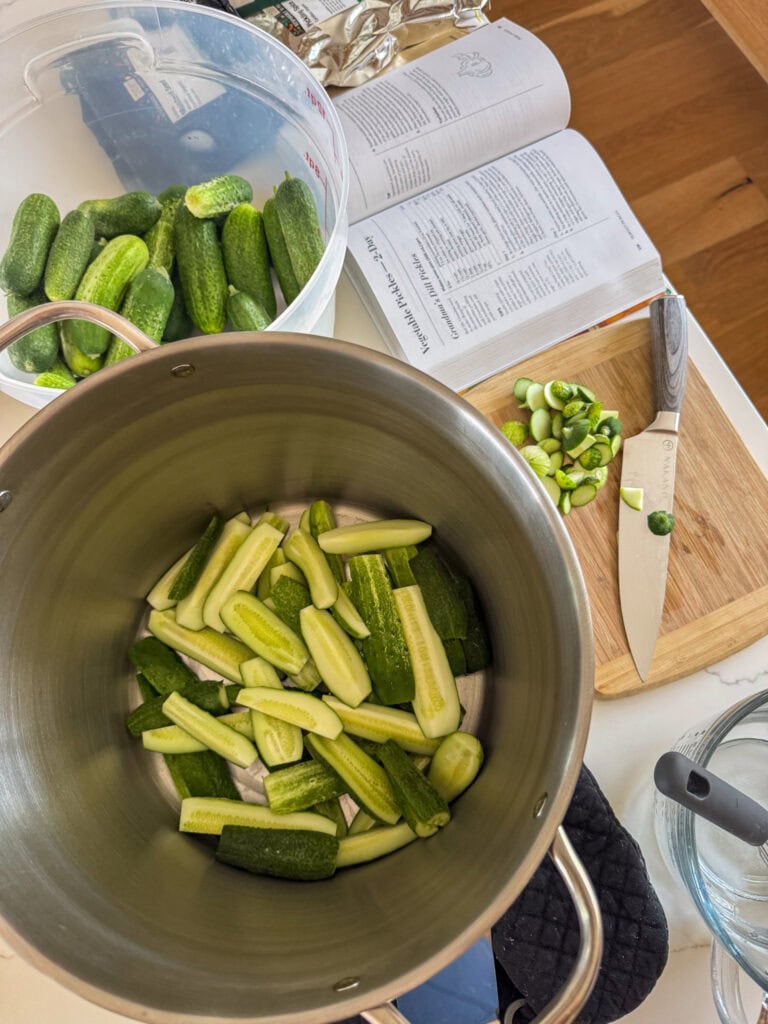
I also try not to let my pickling cucumbers grow much longer than about four inches, and I always trim off the blossom end. That’s the end opposite the stem, and it contains enzymes that can contribute to softer pickles.
I like to soak the cucumbers in ice water and salt for about 12 hours before pickling them, too. Then I rinse them well and move on with the recipe.
And then there are grape leaves. Adding grape or muscadine leaves to pickle jars is an old-school trick intended to help preserve crispness. I use muscadine leaves because we have plenty of them around here, and in our highly scientific blind family taste test, the pickles made with muscadine leaves were actually crisper than the batch made with calcium chloride.
Yes, I conducted a blind pickle taste test with both family and friends. I told you this was the summer of pickles.
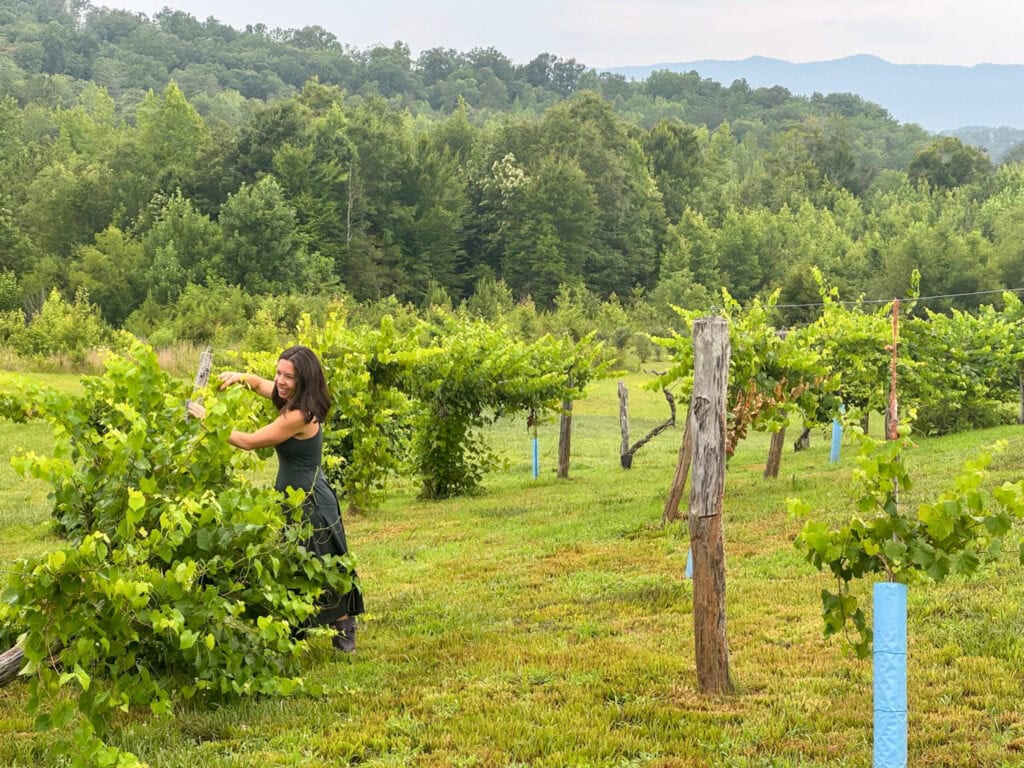
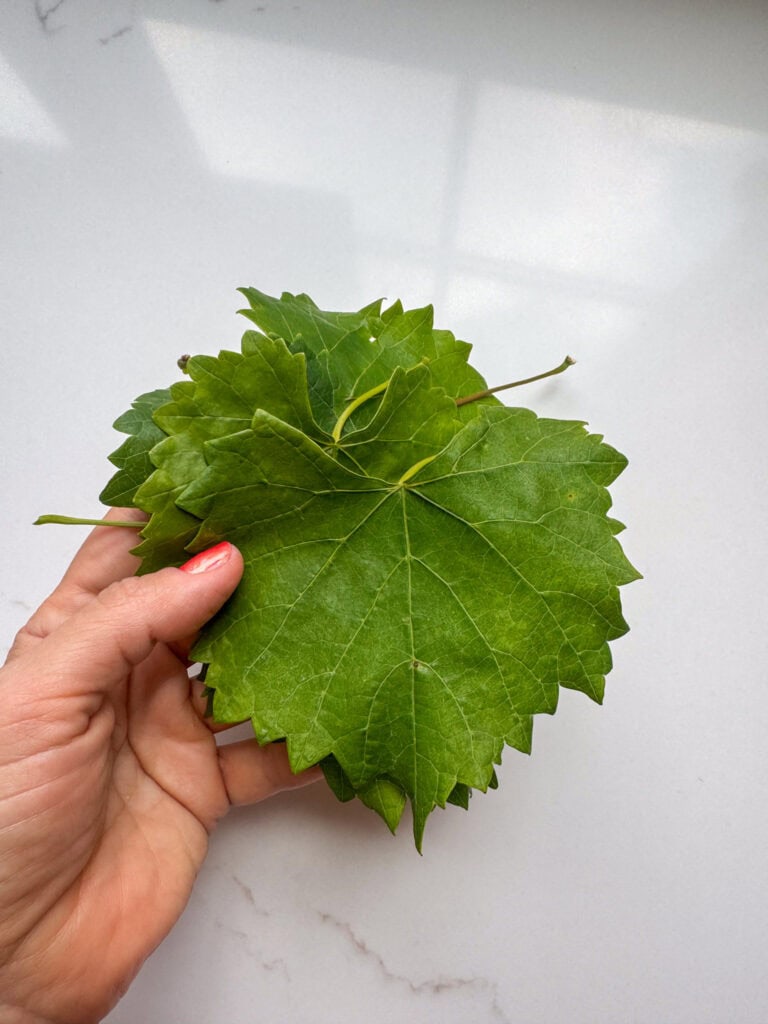
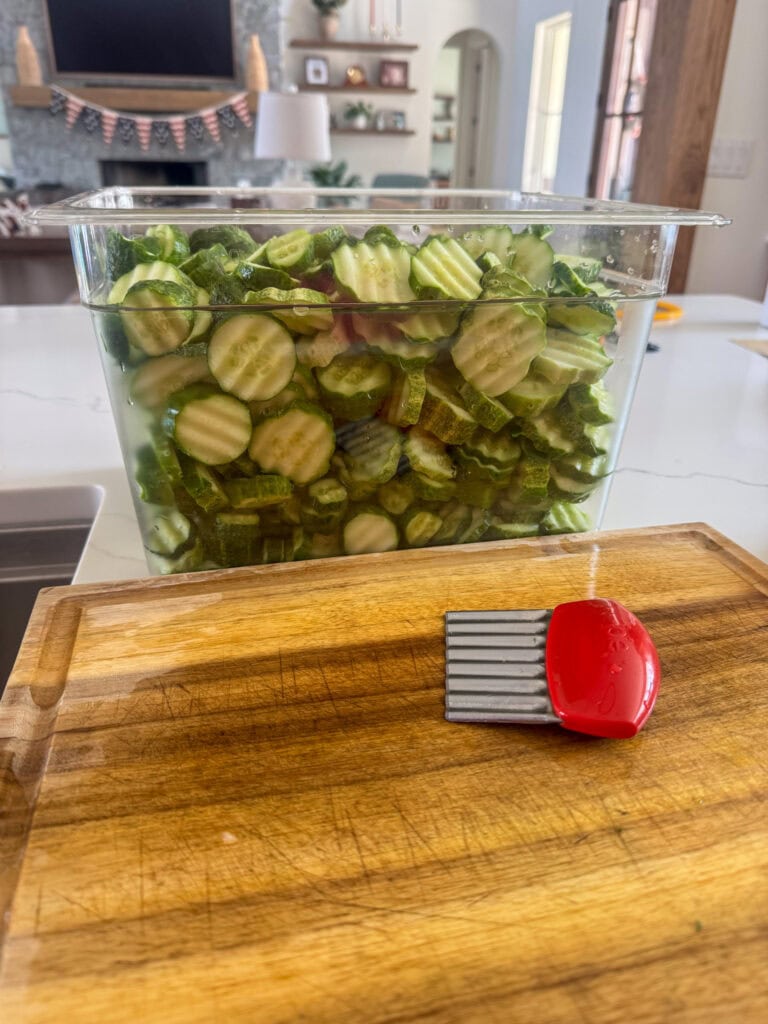
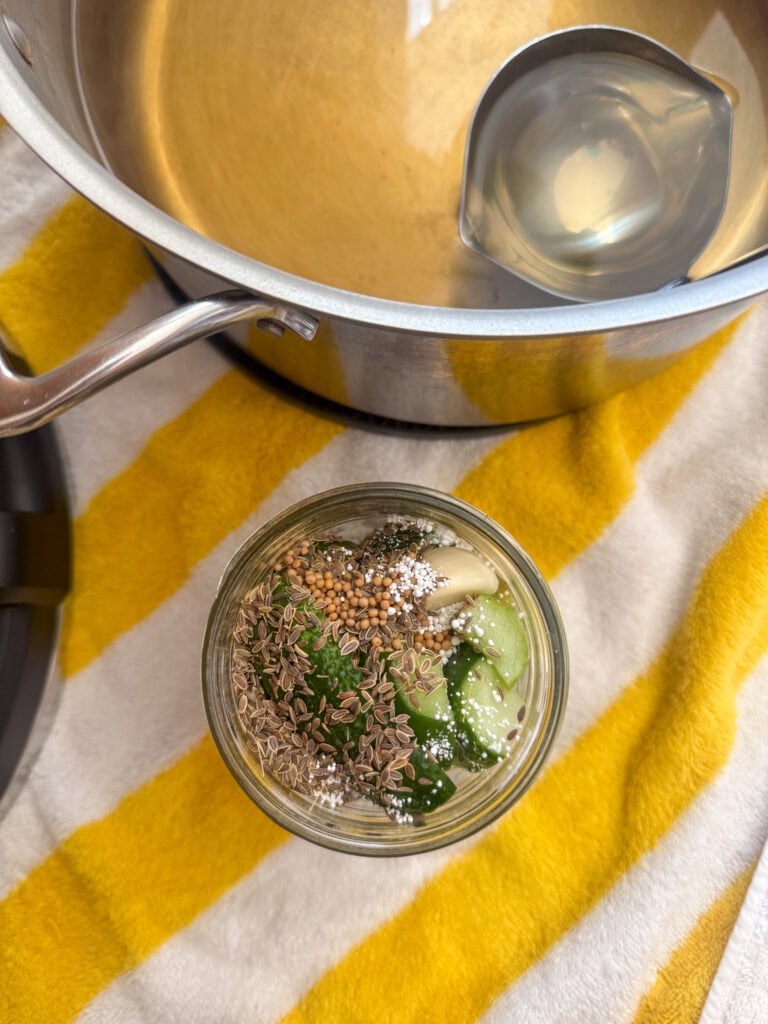
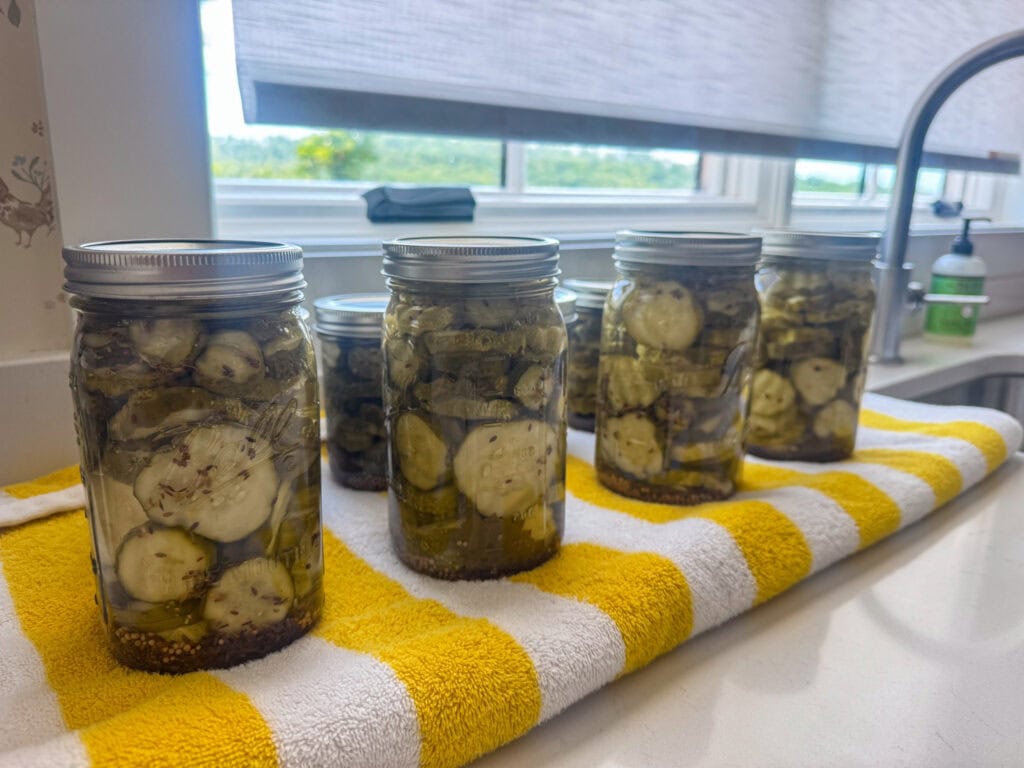
Technically, they say that grape leaves aren’t necessary if you properly remove the blossom end, but Grillos puts them in their pickles so… that’s scientific enough for me. I enjoyed experimenting with the muscadine leaves, liked our results, and will probably continue using them.
Calcium chloride can also help with crispness, especially if you don’t have access to grape or muscadine leaves. I got this kind.
Preserving the Harvest
Preserving all this food is taking a lot of time. I enjoy it, though! Or maybe “enjoy” isn’t always the exact word, because sometimes it’s hot, messy, my kitchen looks like a small-scale production facility, and it leaves me with zero desire to cook dinner.
But I find it incredibly satisfying and rewarding.
Right now, I’m water bath canning pickles, freezing and vacuum sealing zucchini and okra for fall vegetable beef soups, and freezing tomatoes until I have enough ripe at once to make and can pizza sauce.
The zucchini and okra are actually coming from the community garden I’m part of through my gardening club, which has been such a fun added source of produce this summer. I love the entire idea of taking something that is abundant right now and turning it into something we’ll appreciate months from now.
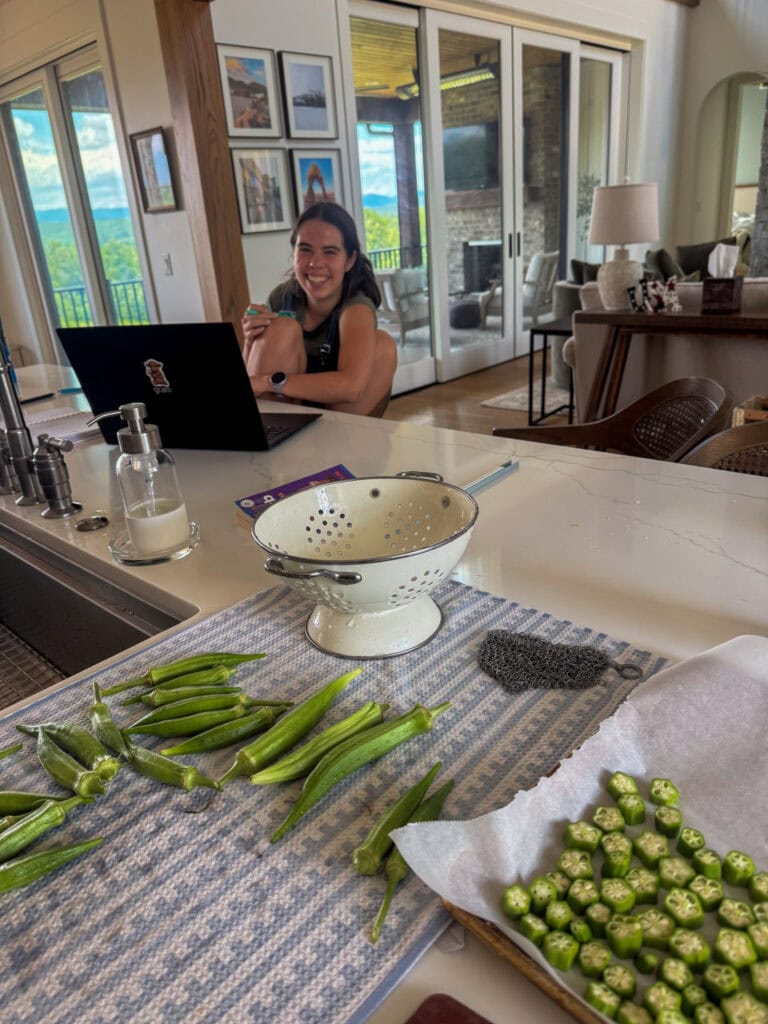
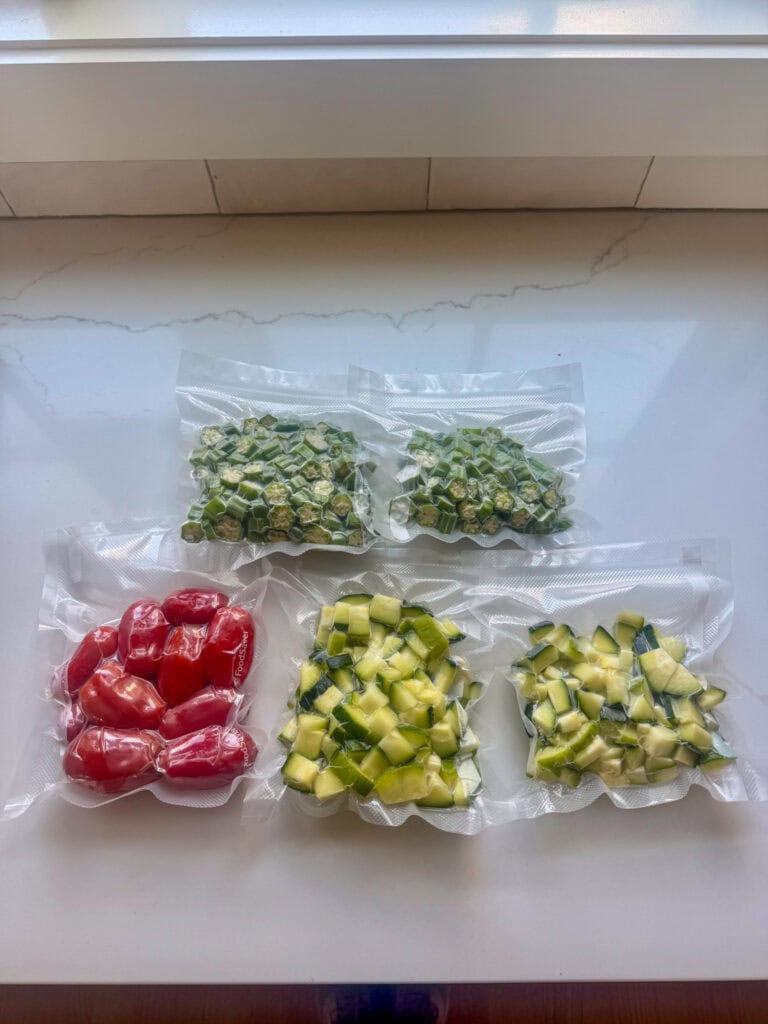
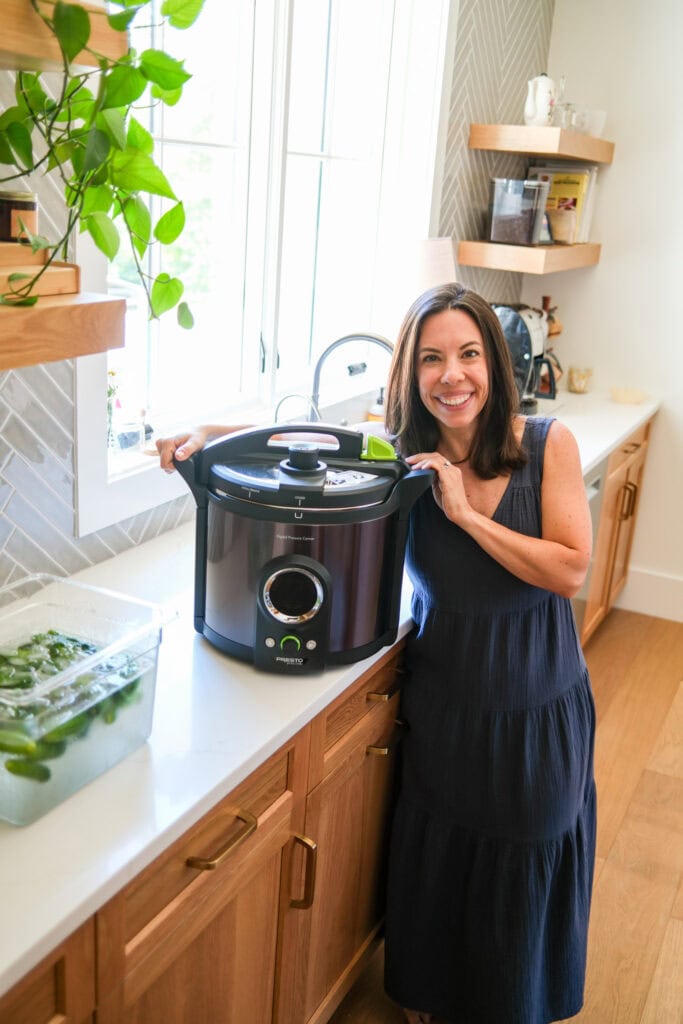
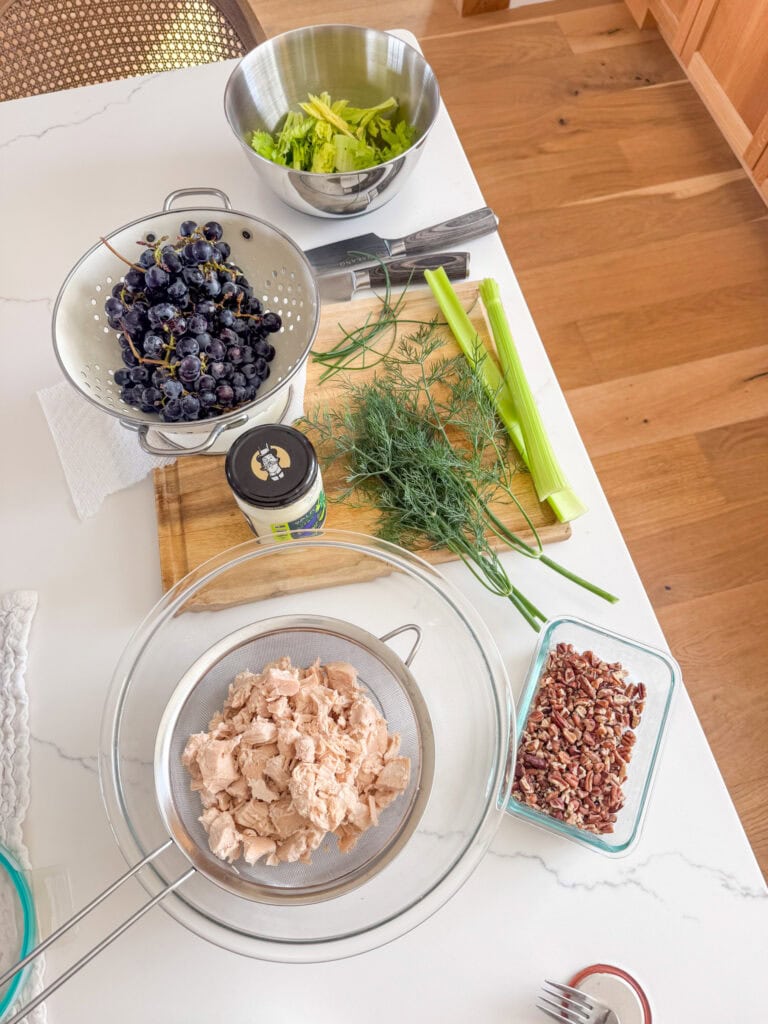
In August, I also hope to find time to make broth, soup, chili, and a few other things to can so they’re shelf stable and ready to grab later. I’ve already done this with chicken in my electric canner (you need to pressure can these items), and I LOVE having canned chicken on hand.
It makes chicken salad so easy, but it’s also helpful for quick soups, casseroles, and those nights when I need dinner to come together without much thought.
That’s the part of preserving I love most. It’s a lot of work in the moment, but it feels like I’m doing my future self a favor. There is something deeply satisfying about looking at a shelf of food you grew, cooked, and preserved yourself. Just call me Ma Ingles. Ahem, Ma Dixon.
What I’ll Plant Next Year
After seeing what we actually ate and enjoyed most this summer, I already have a much clearer garden plan for next year.
For cucumbers, I’ll stick with slicing cucumbers and pickling cucumbers. The gherkins were fun to try and incredibly prolific, but they weren’t the best fit for how our family actually likes to eat pickles.
Next year, I’m planning to grow:
- Two pickling cucumber plants
- One or two slicing cucumber plants
- Two shishito pepper plants (loving these as an easy app!)
- Two Cherokee Purple tomato plants
- Two San Marzano tomato plants
- One or two cherry tomato plant
- One zucchini plant
- Green beans on the trellis
- Peas on the other trellis
This year’s garden reminded me that plants get much bigger than they look on those tiny little tags at the garden center, so I’ll space them more accordingly (looking at you, zucchini). More breathing room should mean better airflow, easier harvesting, and hopefully a garden that feels slightly less like it is plotting to take over the yard.
That said, I actually like the timeline of my garden season. Things start to take off in June, then by mid-July, the temperatures are getting crazy hot, the cucumbers are coming in faster than we can eat them, and preserving food starts to feel like a part-time job.
By the time August rolls around, I’m usually pretty ready to rip everything out and be done with it.
I know some gardeners plant for a second harvest or work hard to keep everything going into fall, but I’m not sure that’s my goal at the moment. I do want to do a couple things for fall, but our schedule will really fill up and I don’t want any guilt about not being able to get to the garden. In the off season I hope to learn about how to best tend to the soil (add nutrients back in, kill bug eggs, etc) for another thriving spring and summer next year. But… I’m getting ahead of myself. It’s still July afterall!
I’m really glad I declared this the summer of pickles. I learned what we like, what we don’t, how many cucumber plants are actually reasonable, and that I am apparently the kind of person who gets genuinely excited about a crispness comparison.
I wanted to add my go to pickle recipe to this post but it’s already longgggg so if anyone is interested, I’ll share it in another post soon.
Have any cucumber, pickling, or canning questions? Ask away! It’s one of my favorite current topics of conversation! Now, off to chop some cucumbers to make and can some relish 🙂

Kathy says
You are amazing and inspiring. I don’t know how you get it all done!! Great job!!
Destiny Ervin says
This was so helpful and fun to read! I so enjoy your blogs! I want to learn how to garden. I did try with my girls this year! We live in a very hard climate though, the high desert and I did not get one cucumber this year. If you learn how to help your soil in the off season and how to get rid of bug eggs I would love to learn that as well! I would also love to read about your go to recipe for cucumbers!
Brittany Dixon says
I’ll report back with what I do for the soil once I learn! Climate does make a big difference. As done sun. I struggled to grow much of anything in my garden at the last house. This one has SO much sun and I think that makes the biggest difference. I’ll get my go to recipe for pickles typed up soon! 🙂
Joanna says
I am amazed at how much you have learned and how much produce you have grown! I would love to one day be able to do the same. Would you be able to do a step by step how to grow a garden haha! That’s how much of a green thumb I have, here’s hoping. 🙂
Brittany Dixon says
Get good soil, grow a lot of seedlings then pick the best, pick a spot with a lot of sun, prune aggressively, kill bugs, enjoy the harvest, rip them out when the bugs eventually win- ha! 😉
Amy says
what vacuum sealer do you use? And do you like it?
Impressed with your haul and canning! That takes a lot of time and effort.
Brittany Dixon says
I have a fairly old Foodsaver vacuum sealer and it’s worked really well for years! I am about to try out (they are sending me one) a chamber vacuum sealer which I know makes it possible to seal with liquids (like marinades). The Foodsaver version you have to hit “stop and seal” before any liquid gets sucked up into it otherwise it won’t seal, but it works really well for any dry goods and for frozen items.